As New Zealand prepare to face India in a friendly match, both teams come into this encounter with fluctuating forms and a lack of significant head-to-head data. New Zealand, playing at home, have shown signs of improvement despite their overall challenging recent record. India, on the other hand, have been inconsistent, particularly away from home,

New Zealand vs India | Prediction and Analysis | 15/11/2026
10.11.2026
07:00
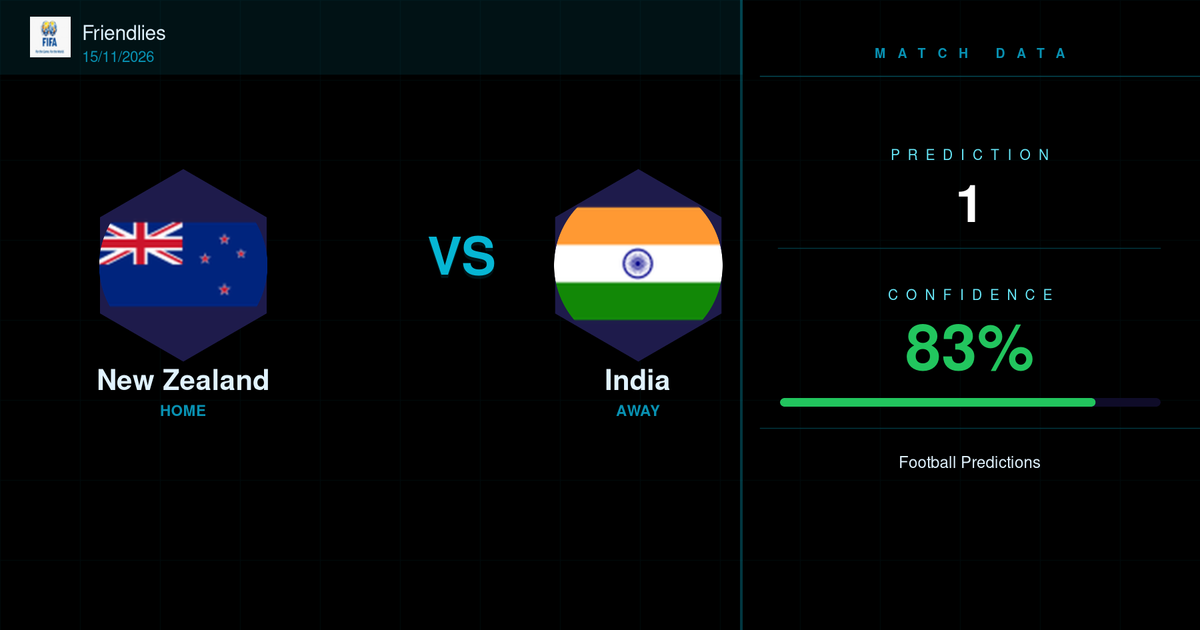
Friendlies15/11/2026 · 03:00
 New Zealand
VS
 India
Final Result
New Zealand 3 : 0 India
Our prediction: 1 ✓
The model suggests a 41% probability for a New Zealand win, offering a value edge over the market's implied probability, indicating that the market may be underestimating New Zealand's home advantage and recent form improvement.
As New Zealand prepare to face India in a friendly match, both teams come into this encounter with fluctuating forms and a lack of significant head-to-head data. New Zealand, playing at home, have shown signs of improvement despite their overall challenging recent record. India, on the other hand, have been inconsistent, particularly away from home, where their defensive frailties have been exposed. With model probabilities providing insights into potential outcomes, this match presents an intriguing betting opportunity.
★ BEST BET
Data: API-Football · odds as of November 10, 2026 07:00
Form Analysis and Betting Implications
New Zealand's recent form has been a mixture of highs and lows, with their last five matches yielding two wins, one draw, and two losses. The victories against Panama and China were crucial, demonstrating their ability to find the back of the net with a total of eight goals scored in these fixtures. However, their defence remains a concern, having conceded ten goals in the same period. At home, their record is less favourable, with only one win in six matches, scoring an average of 1.33 goals per game while conceding a worrying 2.67. This defensive vulnerability could be a significant factor against India.
India's form is similarly inconsistent, with their last five matches resulting in one win, two draws, and two losses. Their recent victory over Pakistan was a high-scoring affair, ending 3-2, but heavy defeats to Uruguay and Brazil highlight their defensive issues. Away from home, India's record shows two wins, three draws, and five losses, scoring an average of 0.8 goals per game and conceding 1.4. This suggests that while they can be competitive, they often struggle to maintain defensive solidity on the road.
Given these form patterns, the market may slightly undervalue New Zealand, especially considering their recent uptick in attacking output and India's defensive struggles. The model's expectation of a 41% win probability for New Zealand could offer value if the market's implied odds are less optimistic about a home victory.
Market Analysis and Betting Opportunities
In evaluating the match result market, New Zealand are given a 41% probability to win, while India have a 31% chance, with the draw at 28%. This presents New Zealand as slight favourites, particularly when considering their recent form improvement and home advantage. Without specific bookmaker odds available, the model's probability provides a basis for assessing value, suggesting that if the market's implied probability for a New Zealand win is below 41%, there could be a betting opportunity.
Looking at the Over/Under 2.5 goals market, the model assigns a 54% probability to the match featuring over 2.5 goals. Given both teams' tendencies to be involved in high-scoring games—New Zealand's matches have seen over 2.5 goals in 58% of cases—this market could hold potential value. However, without odds to compare against, bettors should look for an edge in the implied probabilities when odds are available.
The Both Teams to Score (BTTS) market is set at a 58% probability by the model. Both teams have been involved in matches where both sides score, with New Zealand and India both seeing BTTS outcomes in 58% of their recent games. This consistency suggests reliability in the model's prediction, offering potential value if market odds underplay this possibility.
For those seeking a safer bet, the Double Chance market offers New Zealand or draw as a more conservative option. This market leverages New Zealand's home advantage and recent form to mitigate risk, particularly given India's away record. This option could be more appealing if the market's odds suggest a tight contest.
Overall, the markets indicate potential value in backing New Zealand, particularly if odds reflect a lower implied probability than the model's assessment. The Over 2.5 goals and BTTS markets also offer intriguing opportunities, contingent on the odds presented.
Risk Factors and Betting Discipline
The primary risk to the value pick of New Zealand winning lies in their defensive record. With an average of 2.67 goals conceded per home game, there is a significant vulnerability that India could exploit, particularly if they manage to replicate their attacking performance seen against Pakistan. If New Zealand's defence fails to hold, the match could easily swing in India's favour.
Another potential pitfall is the nature of friendly matches, which often see teams experimenting with tactics and line-ups. This unpredictability can lead to outcomes that deviate from form-based expectations. Without the pressure of competitive points, both teams might prioritise testing strategies over securing a win, increasing the likelihood of a draw or even an unexpected result.
The market's disagreement with the model could stem from not fully accounting for these variables. Should the odds for New Zealand drop below the model's implied probability, the value would diminish, necessitating a reassessment of the bet's attractiveness.
In terms of bankroll discipline, if odds for a New Zealand win fall significantly below the model's suggested probability, the bet would no longer offer value. Bettors should set a threshold for acceptable odds and avoid chasing value in a volatile market, ensuring that staking remains consistent with the calculated edge.
Betting Verdict and Staking Logic
The recommended bet is for New Zealand to win, with the model providing a 41% probability and a 3.0 percentage point edge over the market's implied probability. This suggests that New Zealand's chances of victory are undervalued, especially given their recent form improvement and India's defensive vulnerabilities on the road. The logic here is that New Zealand's home advantage, combined with their ability to score, positions them well against an inconsistent Indian side.
As a safer alternative, the Double Chance market offers New Zealand or draw, providing a buffer against the potential volatility of a friendly match. This option is particularly appealing if the odds suggest a closely contested game, as it accounts for New Zealand's home form and India's struggles away from home.
The main risk to this prediction is New Zealand's defensive frailties, which could be exploited by India's attack if they find form. Additionally, friendly matches often see unexpected outcomes due to experimental line-ups and strategies. Therefore, while the model provides a statistical edge, bettors should remain cautious and consider these factors before staking heavily.
Frequently Asked Questions
1
2
When is New Zealand vs India played?
New Zealand vs India is played on 15/11/2026 at 03:00.
3
4
Is there a safer alternative bet?
A safer alternative is the Double Chance market, backing New Zealand or draw, which provides a buffer against the volatility of friendly matches.
🔄 New Zealand vs India — Previous Meetings
📋 More Predictions: Friendlies